What does intimacy mean when a life-limiting illness changes our lives?

Dr Kate Sugar is Senior Researcher & Evaluation Lead at Dorothy House. She works with patients, families and hospice teams to explore how palliative and end of life care can support what matters most to people, including communication, relationships and intimacy.
When you hear the word intimacy, what do you think of? Sex? A romantic relationship? Emotional closeness?
For me, intimacy is about feeling connected to the people who are important to me – and, through those connections, feeling connected to myself.
It can be surprisingly ordinary.
My husband knows exactly how I like my morning coffee. He knows which cup I prefer, roughly what time I like to drink it. He knows me well enough not to have to ask.

That small ritual might not look particularly intimate from the outside. But for me, it is. It is an act of care. An act of love. A shared moment between us before the madness of the day begins.
And if I became very unwell and couldn’t hold a cup anymore, I think I would still want that coffee time together. Perhaps I could only manage a couple of sips through a straw. Perhaps I would simply want to smell the coffee in the house. I might still want to hear the clunk and burr of the coffee machine and see it arrive in my favourite cup.
Because it isn’t really about the coffee. It is about what the coffee means.
That, for me, is where intimacy begins.
1. Intimacy is different for everyone

A serious or life-limiting illness can affect many different parts of a person’s life, including their relationships, independence, confidence and sense of identity.
And, when someone has a life-limiting illness, those details can become even more important.
Illness can change someone’s mental mood, body, independence, routines and roles. A partner may become a carer. Someone who has always been a parent, grandparent, sibling, partner or friend may begin to feel that they are becoming primarily a patient.
Intimacy preserves identity and relationships when illness changes what people can physically do. Intimacy can be a way of saying: I know you. You are still you. We are still us.
I remember a story a specialist palliative care nurse told me about a woman in her 40s who she was supporting.
She was angry. Really angry. Angry about what was happening to her and about the life-limiting illness she was living with. When the nurse visited, sometimes the most important thing she could do was listen. She let her shout. She let her be frustrated. She didn’t try to make it better.
Over several weeks, slowly, they built trust.
And eventually, through those conversations, the nurse was able to understand what she really wanted.
She wanted a weekend away with her girlfriends. She wanted to spend time with the women who mattered to her. To laugh, talk, reconnect and feel like herself again. To be a friend, rather than a patient, for a little while. And the hospice was able to support her to achieve this goal.
Sometimes, becoming a carer for someone with a life-limiting illness can make it harder to feel like a partner. For others, helping someone wash their hair, brush their teeth or get dressed may be a very intimate experience. One partner described how personal care created moments for affection and had become part of the way they stayed connected. Washing her hair, washing her back and feet, and even kissing her knee when changing her catheter.
This idea of personal care becoming expressions of love has stayed with me.
The detail that matters is the person.
I have also been struck by how ordinary activities can become intimate precisely because they are part of a shared life. One patient described how, because of their illness and the medication they were taking, they could no longer eat or drink. They and their partner could no longer sit down and have dinner together. What they missed was not simply the food, but the shared moment around it.
This is also where the idea of being seen becomes important. A person who has a life-limiting illness can easily become surrounded by things that identify them as a patient: medication, symptoms, medical and supported living equipment, appointments and care.
But the people who know them intimately see something else.
They know how they take their coffee. They know which chair they always sit in. They know the television programmes they love, the jokes they tell and the things that make them laugh. They see the person. I keep coming back to something a hospice patient affirmed: There is a person under this illness.
2. Intimacy isn’t just sex
Intimacy is often associated with sex, but sex is only one possible expression of intimacy. Intimacy can be physical and affectionate. It can be playful but it can also be quiet and still.
Intimacy can be holding hands, lying beside each other, having a cuddle or giving someone a hand or foot massage when a hug is no longer comfortable. For some people intimacy can be talking, reading a book to another person, listening to ‘our song’ or watching ‘our family show’ on television.

Intimacy can be sitting next to someone without talking at all. A specialist palliative care nurse told me about a couple she was supporting.
When she first met them, the husband with the life-limiting illness was able to talk with his wife. But over the course of a week his condition changed rapidly. By the time the nurse saw them again, he was mostly monosyllabic and had become very withdrawn. He wasn't talking to his wife, and she didn't know how to talk to him.
The nurse spent time with them separately, but then brought them together. Although he could no longer converse as he had before, he could still understand. And the nurse said something that brought great comfort to the wife: Silence is golden.
Intimacy can be sitting beside someone, being together, and knowing that you don't have to fill the silence or be an ‘active visitor’.
The important thing is not that we experience intimacy in exactly the same way. It is understanding what connection means to the people involved.
This is one of the things that stayed with me from Dying for Sex. At the heart of Molly’s story is a desire to take back some control in the face of something she cannot control. In finding her voice and expressing her sexual intimacy needs and desires, she also finds a voice to speak up about what she needs from her medical care.
Those ideas – a sense of control and finding your voice – extend beyond sexual intimacy. Life-limiting illness can take away control over so many parts of life. Intimacy can be one place where someone can still say: this is what matters to me. This is how I want to connect. This is what I want to keep.
And what someone wants may change as their illness progresses. Change is allowed.
For someone who is at end of life, non-sexual intimacy may become particularly important especially when we think about a person’s wider family and social connections.
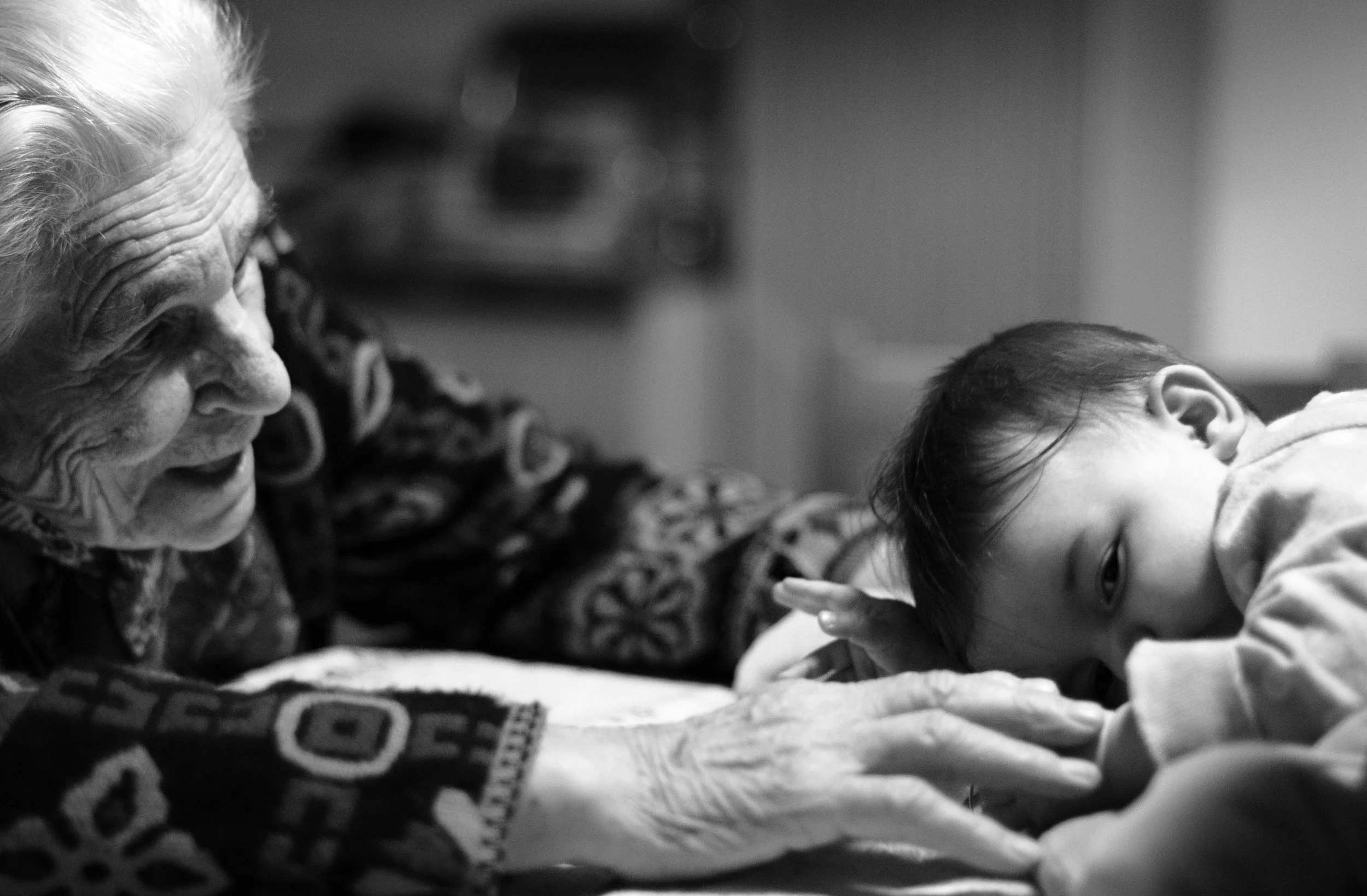
Imagine a grandparent who is too unwell to get out of bed. A cuddle bed (a specialist bed that can be widened to allow two people to lie side by side) can make it possible in a hospice for a grandchild to climb up beside them rather than standing at the side of the bed. The child can read a story to their grandparent or simply lie together.
They may have done this many times before pre-illness curled up on the sofa or climbed into bed for a story. For a moment, the past relationship is brought into the present.
The person in the bed isn’t only a patient. They are a grandparent, and the grandchild isn’t simply a visitor. They are still a grandchild.
The same principle can apply to partners. A couple may want to share a bed, celebrate an anniversary or renew their vows even when one person is very ill. Sometimes the practical environment needs to change to make that possible.

We ask.
This is where I think healthcare professionals have an important role. This doesn't mean that every healthcare professional needs to ask every person about every aspect of intimacy. But it does mean being willing to open the door to the conversation when it matters.
Healthcare is very good at asking for details about pain, symptoms, medication, toileting and other aspects of personal health and care.
But we could also ask:
What kinds of things did you enjoy doing together before the illness?
Are there things you would like to keep doing together?
What can we do to support you to keep doing the things that help you feel connected to each other?
Is there something about your relationship that you are worried about losing?
These questions are not about assuming someone wants sex. They are not about telling someone what intimacy should look like. They are about giving someone the opportunity to find their voice.
A person might say, “Actually, having a cuddle with my child when they visit me on the inpatient unit is really important to me today.”
They might say, “I’m too worried to cuddle my husband now. I wouldn’t want to hurt him.” A nurse, physiotherapist or healthcare assistant with appropriate training in therapeutic use of touch might explore whether this could offer another way of staying close.
They might also say, “I don’t want to talk about that.”
All of those answers are okay.
A healthcare professional might notice the way people interact with each other the silences, the body language and the little nuances that pass between them. But noticing is not the same as knowing.
We cannot assume we know what intimacy means to someone, or what they most want to hold on to. Asking about intimacy is an invitation, a way of saying that relationships, closeness and the things that matter to people are part of their care.
Some people may welcome the invitation. Some may not want to talk about it. For others, the question may prompt them to reflect and return to the conversation later. The important thing is to ask, listen and allow people time to think, without feeling the need to fill every silence.
And sometimes that conversation may lead to a very practical change: asking for privacy on the inpatient unit, protected time to share a meal or spend time together, rearranging a room, changing how a visit happens, or finding a way for people to continue an ordinary ritual they thought they had lost.
Perhaps that is why conversations about intimacy matter.
So, what parts of your relationships would you most want to continue at the end of life?
The morning coffee.
Holding hands.
Sleeping beside someone.
Listening to your wedding playlist.
Watching your favourite programme together.
Or simply having someone sit beside you without needing to say anything.
Would the people around you choose the same things? How could you begin talking to them about it?
And sometimes, even at the very end, when we make time for conversations about intimacy, it can create a new way of being together – a final evolution of the relationship, so that no one faces death alone.